


Understand why fainting due to heart problems (cardiac syncope) should never be ignored, and how immediate medical assessment can prevent life-threatening complications.
Main image: Warning signs of cardiac syncope may include chest pain, palpitations, breathlessness, repeated fainting episodes, collapse during exercise, or a family history of sudden cardiac death.

We have all seen it on the big screen, where a character dramatically faints or collapses after receiving a piece of shocking news. While such scenes are often dramatised, fainting in real life can happen for many reasons, and not all of them are harmless. Although many episodes are linked to stress, dehydration, prolonged standing, or overwhelming emotion, some collapses may in fact be the body’s first warning sign of a serious underlying problem involving the heart. What appears to be a brief and isolated blackout can sometimes point to a far more dangerous condition that requires urgent medical attention.
 While syncope, or better known as fainting, accounts for roughly 1 to 3 percent of emergency department visits, cardiac-related syncopes remain far more dangerous because of their association with serious arrhythmia, sudden deterioration, and death, shares Sunway Medical Centre Velocity (SMCV) Consultant Emergency Physician Dr Cyrus Lai Sin Nan. He adds that although these cases are less common, their potential severity means they should never be dismissed too quickly, especially when the collapse happens suddenly, recurs without explanation, or is accompanied by other concerning symptoms.
Understanding Cardiac Syncope
 Cardiac syncope refers to fainting caused by a sudden drop in blood flow from the heart to the brain. SMCV Consultant Cardiologist, Electrophysiologist and Internal Medicine Physician Dr Lim Chiao Wen, explains that unlike common fainting, it is dangerous, often occurs without warning, and can be life-threatening if left untreated. She notes that the causes may include irregular heart rhythm, structural problems affecting the heart muscle or valves, as well as serious circulation-related events such as a blood clot in the lungs or a tear in the body’s main artery.
Part of what makes this condition so concerning is how easily it can be mistaken for an ordinary fainting episode. Dr Lim explains that when the heart beats too fast or too slow, blood pressure can fall suddenly, reducing blood flow to the brain and causing collapse without warning. She highlights a small number of structural conditions more closely linked to cardiac syncope, including hypertrophic cardiomyopathy (thickening of the heart muscle), aortic stenosis (narrowing of the aortic valve), and myocarditis (inflammation of the heart muscle).
She also points out that emotional stress may affect the heart more directly than many people realise, as adrenaline surges can disrupt both heart rhythm and blood pressure. Importantly, she cautions that abnormal heart rhythm can occur suddenly and may not be picked up during routine screening, which means even a seemingly healthy person may collapse without prior warning.
The Role of Accident and Emergency (A&E) Department in Managing Cardiac Syncope Cases
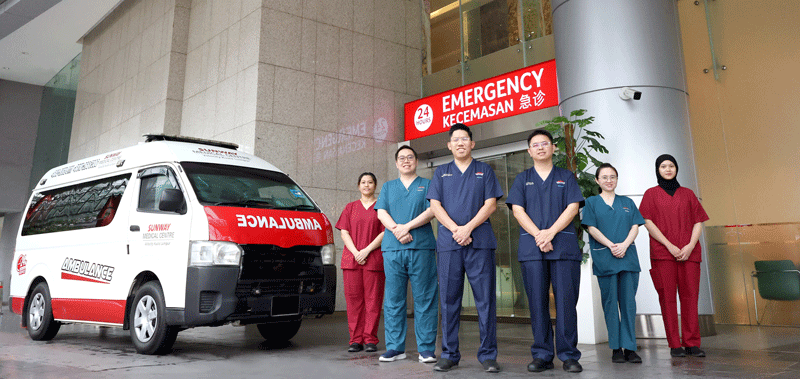
A person recovering quickly after a collapse does not necessarily mean the episode is harmless. In cardiac syncope, the loss of consciousness may last only a short time, but the underlying cause can still be serious. This is why the accident and emergency (A&E) department becomes such a crucial point of assessment, as the immediate goal is not only to stabilise the patient, but also to determine whether the collapse reflects a dangerous heart-related problem that needs urgent attention.
“In A&E, the more common cardiac-related presentations are usually chest pain/acute coronary syndrome, arrhythmias, heart failure, and uncontrolled hypertension,” says Dr Cyrus. He points out that while cardiac syncope can occur at any age, it is often more concerning in older adults, especially those with reduced blood flow to the heart, heart valve disease, abnormal heart rhythm, implanted pacemakers, or multiple medical conditions. Younger patients, however, are not exempt from risk. “In younger patients, we become particularly alert if syncope happens during exertion, with palpitations, or there is a family history of sudden death, because inherited arrhythmic disorders or structural conditions such as hypertrophic cardiomyopathy can be involved.”
He also stresses that warning signs such as chest pain, palpitations, breathlessness, collapse during exercise, repeated episodes, or a family history of sudden cardiac death should always prompt urgent medical attention.
Management and Treatment
Once the cardiac syncope patient has been assessed in A&E and immediate danger has been addressed, the focus shifts towards identifying the exact cause of the collapse and deciding how much further treatment or monitoring is needed. Dr Cyrus outlines that the core emergency workup usually includes airway, breathing and circulation assessment, vital signs, a blood sugar check, focused history, physical examination, orthostatic blood pressure where appropriate, and a 12-lead ECG assessment, which records the heart’s electrical activity to look for rhythm problems or other warning signs.
Patients with concerning features may also require continuous cardiac monitoring, while further tests may include cardiac blood markers, blood count, kidney and electrolyte tests, and selected imaging based on the clinical picture. From the cardiology perspective, Dr Lim notes that further evaluation may also involve echocardiography, which uses ultrasound to assess the heart’s structure and pumping function, Holter monitoring, which records heart rhythm continuously over an extended period (typically beyond 24 hours), as well as stress testing and selected coronary imaging where needed.
The treatment depends on the underlying cause, and may include medication, implantable devices such as pacemakers or defibrillators, or ablation to correct abnormal electrical pathways in cases of life-threatening rhythm disturbances. When a heart attack is identified, urgent procedures such as coronary angioplasty and stent placement may be required to restore blood flow.
At the same time, Dr Cyrus stresses that risk stratification remains central to cardiac syncope management, as patients with suspicion of cardiac syncope, abnormal ECG findings, low blood pressure, raised cardiac markers, structural heart disease, significant medical conditions, or exertional syncope are more likely to require admission, while lower-risk cases may be discharged with appropriate follow-up.
This is precisely why fainting should never be automatically dismissed as harmless, especially when it occurs suddenly, repeatedly, or alongside symptoms such as chest pain, palpitations, or breathlessness. Although many fainting episodes are typically non-threatening, cardiac syncope remains one of the most serious causes because it may be the only warning sign before a major cardiac event.
Dr Lim warns that if left undiagnosed, cardiac syncope can be life-threatening and carries a high risk of mortality, while Dr Cyrus stresses that early recognition in A&E is crucial because some patients may appear stable at first yet still be at risk of rapid deterioration. In other words, what seems like a brief fainting episode may actually be the body’s only warning before a serious cardiac event — making timely assessment and intervention critical to prevent potentially fatal outcomes.
As a precaution, the public is encouraged to adopt a healthy lifestyle and undergo regular health screenings. Individuals with a strong family history of heart conditions should consider starting these screenings at a younger age, as early detection plays a key role in reducing the risk of serious cardiac events and improving long-term health outcomes.
Lastly, it is important to be aware of the risks and symptoms of cardiac syncope and not to assume that every fainting episode is insignificant. Immediate medical attention should be sought if fainting is accompanied by chest pain, palpitations, breathlessness, occurs during exercise or while lying down, or is followed by prolonged confusion or serious injury. Individuals with repeated episodes, known heart disease, or a family history of sudden death should also seek prompt evaluation. Even if recovery appears quick, these warning signs may indicate a potentially life-threatening condition that requires urgent assessment and treatment at the nearest hospital.
Sunway Medical Centre Velocity is located at Lingkaran SV, Sunway Velocity. For enquiries, please contact +603 9772 9191 or email smcv-enquiry@sunway.com.my. For more information or to learn more about Sunway Medical Centre Velocity, visit www.sunmedvelocity.com.my (Facebook: Sunway Medical Velocity).
