

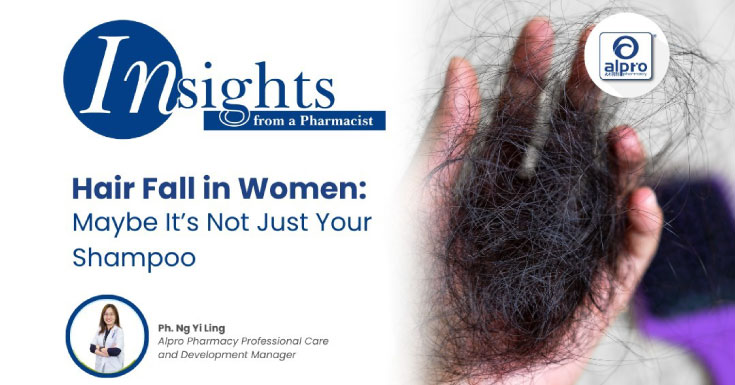
Many women come to the pharmacy and say:
“My hair keeps falling. Is there anything I can take?”
Usually, they have already tried changing shampoo, using hair serum, using hair tonic, or going for scalp treatment. These may help if the issue is mainly from scalp care or external hair damage.
But: Hair fall is not always just a hair problem. Sometimes, it is a bodily signal.
When hair starts falling more than usual, feels rougher, breaks easily, or looks thinner, it may be related to what is happening inside the body, such as low iron stores, poor nutrition, stress, hormonal changes, poor sleep, or other health conditions. This does not mean every hair fall is serious. It does mean we should not keep treating it blindly.
Before buying another hair product, it is worth asking:
“Is this really only a shampoo problem, or is my body trying to tell me something?”
Some Hair Fall Is Normal
It is normal to lose some hair every day. Hair naturally grows, rests, and sheds. What we need to look out for is a clear change from your usual pattern. The first step is not to be afraid. The first step is to observe properly.
Try This Simple Check: The Hair Pull Test
A simple way to check whether your hair is shedding more actively is the hair-pull test. Gently hold a small group of hair near the scalp and pull lightly from the root towards the end. Do not pull hard. It should not be painful. If many strands come out easily, it may suggest that your hair is shedding more than usual. However, this test does not tell you the exact cause. It is just a simple self-check to help you decide whether to look deeper.
A simple rule is:
If your hair comes out easily with gentle pulling, or if your hair fall is clearly more than usual for a few weeks, don’t ignore it.
You can speak to your pharmacist or healthcare professional for advice.
Hair Health Is Not Only About Hair Fall
When we talk about hair health, we should also consider:
- Does your hair feel rougher than usual?
- Does your hair break easily?
- Are your nails brittle?
- Do you feel tired often?
- Is your period heavy?
- Have you been eating properly?
- Have you been sleeping badly?
- Are you under a lot of stress?
Sometimes, what looks like hair fall may actually be hair breakage. Hair breakage can happen due to colouring, bleaching, heat styling, tight hairstyles, or harsh hair treatment. In this case, external hair care is important.
But if hair fall comes with tiredness, brittle nails, dizziness, heavy menses, or low energy, we should also consider internal health.
Why Your Body Condition Can Affect Your Hair
Some common internal factors include:
| Possible Factor | What You May Notice |
| Low iron stores | Tiredness, heavy menses, dizziness, pale appearance, increased hair fall |
| Not enough protein | Weak hair, poor hair growth, slow recovery |
| Biotin or zinc gap | Brittle nails, rough hair, weak hair structure |
| Hormonal changes | Menstrual changes, postpartum hair fall, and perimenopause symptoms |
| Stress or poor sleep | Sudden hair shedding |
| Medical conditions | Hair fall that does not improve |
Low Iron Stores: One Common Issue Women Should Not Miss
Many women know about “low blood” or anaemia. But before anaemia happens, some women may already have low iron stores (Ferritin). This is where ferritin becomes important.
Ferritin is a marker of iron storage in the body. When ferritin is low, your body may not have enough iron reserve. This may affect energy, concentration, and hair health.
Women may be more likely to have low iron stores because of:
- monthly menstruation
- heavy menstrual flow
- pregnancy or postpartum history
- low intake of iron-rich food
- dieting or restricted diet
- poor iron absorption
- always feeling tired but thinking it is “normal”
What About Biotin?
Biotin is commonly known as a “hair vitamin”. It supports normal body function and is often used for hair, skin, and nail health. Biotin may be helpful when you notice:
- brittle nails
- weak hair strands
- rough hair texture
- hair that breaks easily
- poor hair quality
- poor nutritional intake
However, biotin is not a magic solution for all hair fall. If the main issue is low iron stores, hormonal changes, stress, thyroid problems, or another medical condition, taking biotin alone may not solve the problem.
A simple way to understand it:
| Your Concern | What May Be More Suitable |
| Hair fall + tiredness + heavy menses | Consider ferritin check/iron support if needed |
| Rough hair + brittle nails | Biotin or zinc may help support hair and nails |
| Poor diet or low protein intake | Improve daily meals first |
| Stress-related hair fall | Sleep, stress care, and nutrition support |
| Persistent thinning | Seek professional assessment |
What You Can Do First
Before buying many supplements, start with the basics.
1. Eat enough protein
Hair needs protein to grow. Try to include protein-rich foods such as eggs, fish, chicken, tofu, beans, milk, yoghurt, or lean meat in your meals.
2. Take iron-rich food
Iron-rich foods include red meat, liver, egg yolk, fish, beans, spinach, and fortified foods. Taking fruits rich in vitamin C together with meals may also support iron absorption.
3. Be gentle with your hair
Reduce frequent bleaching, colouring, heat styling, and tight hairstyles. If the hair is already weak, harsh treatment can make it break more easily.
4. Sleep and manage stress
Stress and poor sleep can affect the hair cycle. Sometimes, hair fall becomes obvious a few weeks after a stressful period.
5. Don’t take supplements blindly
Iron, biotin, zinc, and other hair supplements may help, but only when they match your actual need. If you are unsure, ask your pharmacist.
Be Patient: Hair Recovery Takes Time
Hair does not recover overnight. Even after improving nutrition or correcting low iron stores, visible improvement may take at least 2–3 months.
This is because hair grows slowly, and the hair cycle needs time to respond. So don’t change products every few days and assume nothing works.
Instead, follow a proper plan:
- Identify the possible cause
- Correct daily nutrition
- Use supplements only when needed
- Monitor consistently
- Seek help if it does not improve
Consistency is very important. If you are unsure, speak to your pharmacist. We can help you understand your symptoms, check your risk factors, guide you on suitable supplements, and advise whether further checking is needed.
Hair fall is not always something to fear. But it is something worth listening to.
Author: Pharmacist Ng Yi Ling, Alpro Pharmacy Professional Care and Development Manager
