

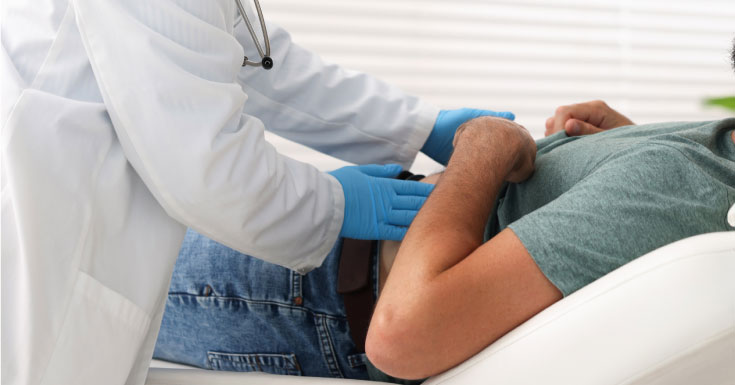
What to expect before, during, and after an endoscopy — and why waiting might cost more than the procedure.
Malaysians are remarkably good at finding explanations for stomach discomfort. Too much chilli, too much coffee, too much stress – there is always a reason ready, and often an antacid within reach. For occasional discomfort, that may be enough – but when symptoms keep returning, worsen over time, or stop responding to the usual remedies, what many call “just gastric” may need a closer look.
Main image: Canva
When one starts to feel persistent heartburn, bloating, nausea, epigastric pain, difficulty swallowing, or recurring indigestion, it can point to a range of conditions – from gastritis and acid reflux to peptic ulcers or more serious concerns that warrant early attention. An upper gastrointestinal (GI) endoscopy is one of the procedures doctors may recommend to better understand what is happening inside the oesophagus, stomach, and upper part of the small intestine.
Yet for many patients, an endoscopy can feel intimidating before it even begins. Questions around fasting, sedation, discomfort, biopsies and recovery often create more anxiety than the procedure itself. According to Dr. Tee Sze Chee, Consultant Upper Gastrointestinal and General Surgeon, and Dr Muhammad Ilham Abdul Hafidz, Consultant Gastroenterologist, Hepatologist and Physician at Sunway Medical Centre Damansara (SMCD), this hesitation is one of the more common barriers they encounter – and one that they are determined to break through.
Too Spicy, Too Stressful… or Something Else? Why You Shouldn’t Ignore the Symptoms
Upper GI symptoms are common, and many Malaysians learn to live around them, dismissing them as part of daily life – especially when over-the-counter medication appears to offer temporary relief.
Lifestyle factors also play a role in how symptoms develop and persist. According to Dr Tee, spicy foods, acidic beverages, caffeinated drinks, irregular meal timings, late-night eating, and heavy meals can all contribute to bloating, reflux, or indigestion – patterns that are deeply embedded in how many Malaysians eat and work. Stress and poor sleep can compound the picture further.
Antacids or dietary changes may help manage discomfort, but they do not explain what is causing it. This matters because similar symptoms can point to very different conditions. Persistent heartburn may be linked to gastroesophageal reflux disease (GERD). Recurring upper abdominal pain may be associated with gastritis, peptic ulcers, or Helicobacter pylori infection. The challenge, Dr. Tee says, is that because symptoms tend to come and go, many patients delay seeking evaluation until the condition has begun to meaningfully affect daily life.
Dr. Tee emphasises that certain symptoms should not be repeatedly self-treated. “Frequent heartburn, difficulty or pain when swallowing, persistent nausea, unexplained weight loss, reduced appetite, vomiting blood, or passing black stool are all symptoms that should be properly assessed by a doctor,” she says. “While over-the-counter medications may provide temporary relief, they can sometimes mask underlying conditions that require medical attention.”
An upper GI endoscopy provides the diagnostic clarity that symptom management alone cannot. Using a thin, flexible tube fitted with a high-definition camera, a gastroenterologist can directly examine the lining of the oesophagus, stomach, and duodenum in real time. According to Dr. Tee, this provides a much clearer understanding of the root cause instead of relying solely on symptoms or medication response.
Fast, Sleep, Done: What an Endoscopy Actually Looks Like
Much of the anxiety around endoscopies usually comes from not knowing what to expect. According to Dr. Ilham, the two most common concerns he encounters – regardless of a patient’s age or background – are fear of pain and the worry of waking up mid-procedure. In practice, both are largely unfounded.
Before
Patients are typically required to fast for 6 to 8 hours, so the stomach is empty for a clear examination of the upper digestive tract. Patients should also inform their doctor about any regular medications, allergies, existing medical conditions, or previous reactions to sedation.
During
Sedation is administered intravenously before the procedure begins. Once the patient is comfortable and asleep, the endoscopy proceeds. “They will not feel or remember anything during the procedure,” says Dr. Ilham. The doctor then guides a thin, flexible scope through the mouth to examine the oesophagus, stomach, and duodenum – a process that typically takes less than 10 minutes.
In some cases, a biopsy may be taken during the procedure. Dr. Ilham explains that biopsies are routinely used to test for H. pylori infection. They may also be taken if a visible abnormality – such as an ulcer, polyp, or growth – is identified during the examination.
After
Patients are moved to a recovery area and monitored while the sedation wears off. Mild bloating or throat discomfort can occur, but these usually settle on their own.
Some findings may be discussed shortly after the procedure. Biopsy results typically take a few days and are reviewed at a follow-up appointment, where the doctor will also outline the appropriate next steps based on what was found.
What Late Detection Really Means — and Why Earlier Always Wins
Knowing what happens can make an endoscopy feel less uncertain. But the more important point is this: persistent symptoms should not be left to guesswork.
The challenge with upper GI symptoms is that they rarely announce their own severity. Persistent heartburn, recurring abdominal pain, and ongoing bloating can all stem from easily managed conditions – or they can be the earliest signs of something that requires more urgent attention. On the surface, the symptoms look the same. The difference only becomes clear with proper investigation.
This is where late detection becomes a real concern. According to the Malaysia National Cancer Registry, more than 60% of cancer cases in this country are detected at stage three or four. For upper GI cancers specifically, GLOBOCAN 2022 data shows that stomach cancer recorded 1,528 new cases in Malaysia in a single year alongside 1,223 deaths – a ratio that reflects how often the disease is caught too late to treat effectively, and why earlier intervention matters.
“Medication that works is not the same as a problem that is solved,” says Dr. Tee. “Many of the conditions behind persistent upper GI symptoms are common and very treatable – but some can be early signs of something more serious, including gastric cancer. The symptoms alone cannot tell you which one you are dealing with.”
Dr. Ilham adds that, “In practice, late detection does not just mean harder treatment. It often means we are discussing a very different set of outcomes entirely. Earlier detection gives us options. When gastric cancer presents very late, it is not uncommon that very little can be done toward cure. That is the reality we are trying to change.”
For those who have been putting off an evaluation out of fear, Dr. Ilham offers reassurance: “There’s nothing to fear. The procedure is very simple and straightforward – painless, quick, and very safe.” Dr. Tee adds that most patients are surprised by how manageable it turns out to be. “Whether the symptoms are caused by something mild and treatable or require further attention, getting a proper diagnosis early can offer reassurance, guide the right treatment, and prevent potential complications from being overlooked.”
An endoscopy is not about expecting the worst. It is about understanding what your body has been trying to signal. While “gastric” may be a familiar label, it should not be the reason patients put off getting proper answers.
To learn more about upper GI health and endoscopy services, visit Sunway Medical Centre Damansara’s website or speak to a specialist who can assess your symptoms and advise on the right next steps.
 Dr. Tee Sze Chee,
Consultant Upper Gastrointestinal and General Surgeon,
Sunway Medical Centre Damansara (SMCD)
 Dr. Muhammad Ilham Abdul Hafidz,
Consultant Gastroenterologist, Hepatologist and Physician,
Sunway Medical Centre Damansara (SMCD)
