

Medical, rehabilitation and nursing teams share how coordinated care supports patients as they work towards greater function and independence
Progress in rehabilitation is not always defined by a major milestone such as walking independently again. For some patients, needing less assistance, completing an everyday task more safely or regaining the confidence to try something for themselves can be equally meaningful signs of improvement.
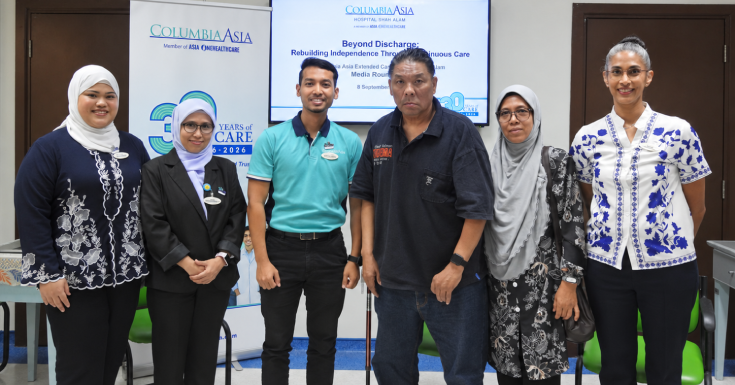
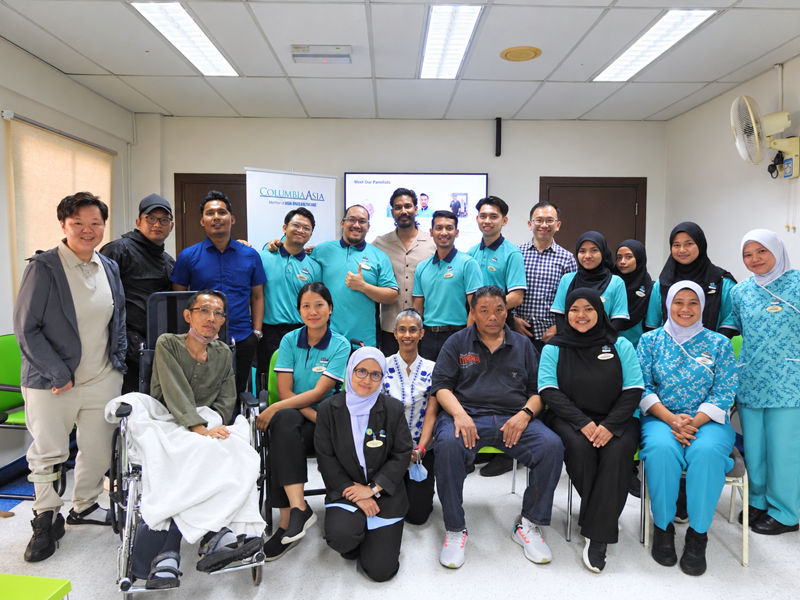
Main image: From left: Roundtable discussion on the topic “Beyond Discharge: Rebuilding Independence Through Continuous Care” with Dr Nur Lidiya Nadia Zulkifli, Resident Medical Officer; Puan Suriani Zainal, Chief of Nursing Services; Encik Mohd Firdaus Zaina Salleh, Manager of Rehabilitation Services; CAECHSA patient Encik Abdul Wahid Sulong and his wife and caregiver, Puan Zalina Hamat; and Ms Bavani Thavarajah, Chief Executive Officer of Columbia Asia Extended Care Hospital Shah Alam.
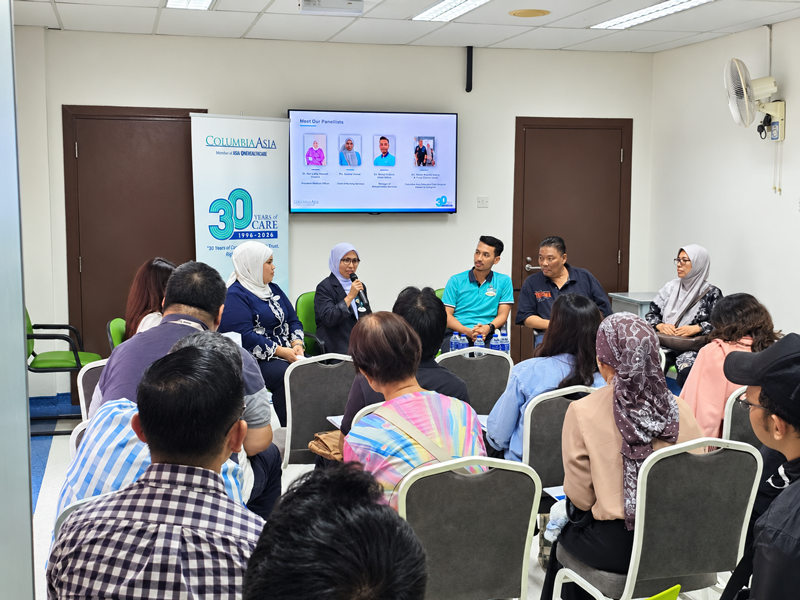
This was among the key insights shared at Columbia Asia Extended Care Hospital Shah Alam’s (CAECHSA) recent media roundtable, “Beyond Discharge: Rebuilding Independence Through Continuous Care,” which brought together its medical, rehabilitation and nursing teams alongside a stroke survivor and caregiver.
The discussion offered a closer look at the different roles involved in rehabilitation, from setting and measuring functional goals to reinforcing them throughout the day and determining when a patient is ready for the next stage of recovery.
Measuring Progress that Matters
At CAECHSA, rehabilitation begins with understanding what a patient can currently do, where assistance is required and what they hope to regain.
Physiotherapy assesses areas including physical function, strength, balance and mobility; occupational therapy considers daily activities, upper-limb function and cognition; while speech therapy addresses communication and swallowing.
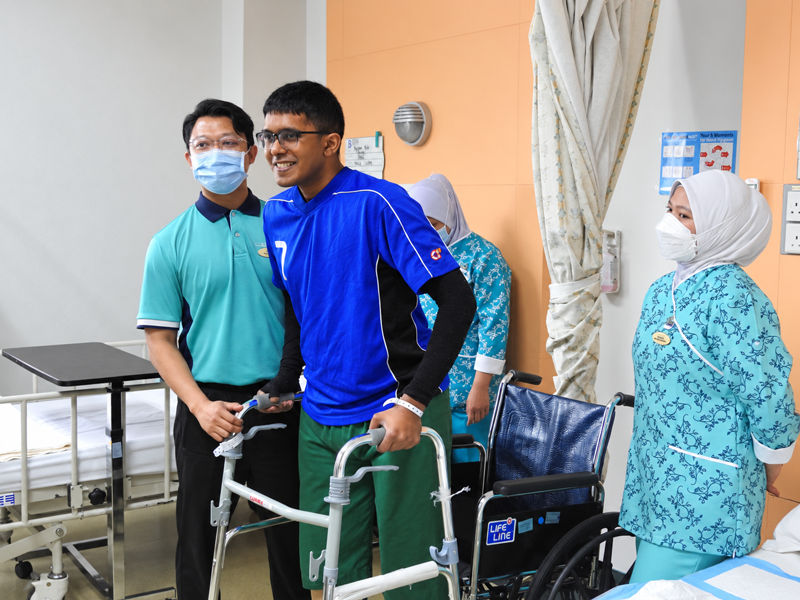
The rehabilitation team also considers what matters to the patient personally, whether that is walking, transferring safely, dressing, communicating or eventually returning to work. Goals are then established together with the patient and, where appropriate, their family or caregiver, and reviewed as their abilities change.
Progress can also be measured by the level of assistance a patient requires. A person may move from substantial physical help, to less assistance, then supervision and, where achievable, independent performance. Safety, quality of movement and confidence are considered alongside objective measures used to monitor mobility and function.
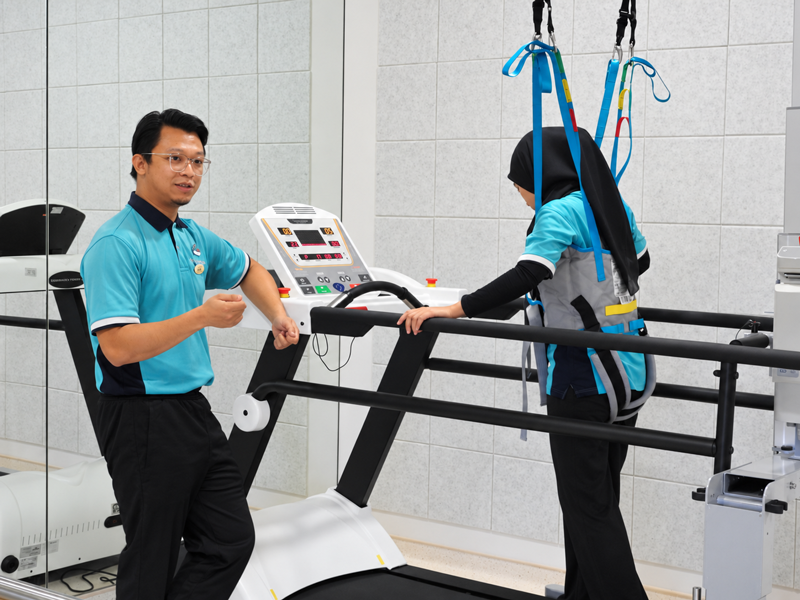
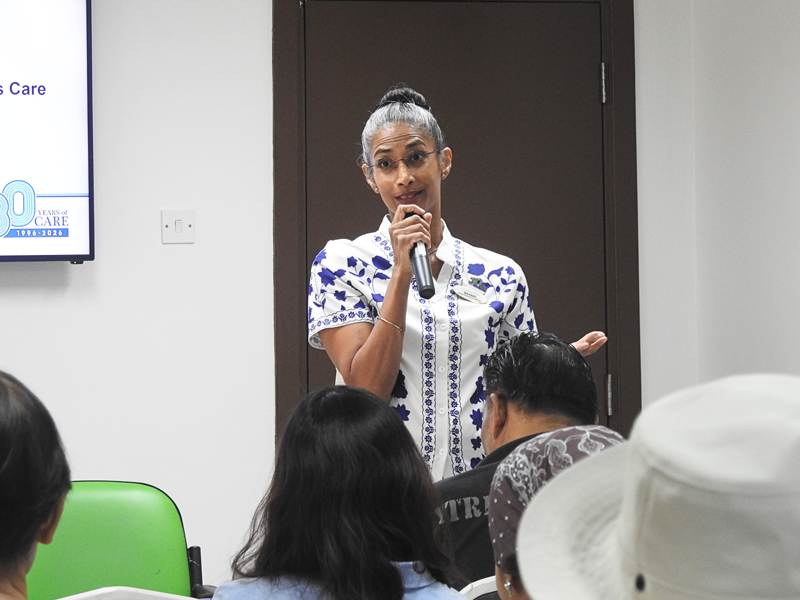
“Our role is not simply to help a patient complete an exercise. We are working towards something that matters in their life, whether that is being able to stand safely, dress themselves or eventually return to work. Sometimes the progress may look small from the outside, but for the patient, needing less help than yesterday can be a very significant step forward,” said Encik Mohd Firdaus Zaina Salleh, Manager of Rehabilitation Services at CAECHSA.
Medical oversight remains an important part of that process. Once a patient’s acute condition has stabilised, the team may still need to consider cognition, mobility and daily function, caregiver availability, necessary equipment and whether the home environment is appropriate for the patient’s needs.
“Our responsibility is to look at the patient as a whole, not only at whether their medical condition has stabilised. We also need to understand whether they can function safely at the next stage and whether the right support is in place. Recovery is not only about being well enough to leave one setting, but being appropriately prepared for what comes next,” said Dr Nur Lidiya Nadiah Zulkifli, Resident Medical Officer at CAECHSA.
The Work that Continues Through the Day
Formal therapy sessions are only one part of a patient’s rehabilitation. At CAECHSA, nurses work closely with the medical and rehabilitation teams to understand each patient’s goals and reinforce the skills they are working on during everyday activities such as getting out of bed, walking, eating and managing personal care.
This also means supporting patients through the emotional demands of rehabilitation. Patients may be tired, afraid or less confident in their abilities, and different individuals may require different forms of encouragement as they adjust to what they can and cannot yet do.
“A big part of rehabilitation nursing is knowing when to help and when to encourage the patient to try for themselves. It can be difficult when someone is tired, afraid or has lost confidence, but doing everything for them can also take away an opportunity to practise. We are there throughout the day to support them, encourage them and help turn what they learn in therapy into something they can use in daily life,” said Puan Suriani Zainal, Chief of Nursing Services at CAECHSA.
Together, these roles allow a patient’s rehabilitation goals to be carried across different parts of the day, with the medical, rehabilitation and nursing teams sharing observations and adjusting support according to the patient’s progress.
When Progress Becomes Personal
For Encik Abdul Wahid, 58, who underwent rehabilitation at CAECHSA following a stroke, those gains carried a deeply personal meaning.
Before his stroke, he worked as a lorry driver and was accustomed to an active and independent life. Afterwards, weakness affecting the left side of his body left him unable to stand or walk, while his speech and swallowing were also affected. He became dependent on others for basic activities including eating, using the toilet and managing his personal care.
“The biggest challenge was not being able to manage on my own and having to depend entirely on other people. Even going to the toilet, I needed help. I felt very sad because before this, I had always been an active person,” said Encik Abdul Wahid.
During his 83-day rehabilitation admission at CAECHSA, he was supported by a multidisciplinary team comprising medical officers, nurses, physiotherapists, occupational therapists and speech therapists. His programme addressed several areas at the same time, including mobility and balance, everyday activities, communication and swallowing.
One of the milestones he remembers most clearly was eventually being able to walk again and use the stairs with a walking aid, something he described as a significant and meaningful achievement after initially being unable to stand or walk without assistance.
His recovery remains ongoing. While he continues to maintain his mobility at home, weakness remains in his left hand and his walking pattern has not fully recovered, with follow-up physiotherapy still recommended.
Encik Abdul Wahid’s experience reflects how rehabilitation can involve different professionals working towards one patient’s individual goals. At CAECHSA, that coordination extends from medical oversight and structured rehabilitation to nursing support throughout the day, with progress assessed according to what each patient is working towards safely and realistically.
