

As haze continues to affect parts of Malaysia and the wider Southeast Asian region, Kuala Lumpur has risen to the top three of IQAir’s most polluted global major city ranking, recording unhealthy air quality as of 10 am on 17 September[1]. The ranking follows days of unhealthy air quality across Malaysia.
In Sarawak, several locations have recorded unhealthy Air Pollutant Index (API) readings, while areas across the Klang Valley and other parts of Peninsular Malaysia have also been affected. Deteriorating air quality has already prompted temporary school closures[2] in parts of Sarawak.
The haze situation is also expected to remain a concern in the coming weeks, with hazy conditions potentially persisting across the region into early November.[3] As Malaysians respond by limiting time outdoors and spending more time at home or in the office, staying indoors may feel like the most obvious way to escape the haze.
But being indoors does not automatically mean the air around us is clean.
Much of the conversation during haze season centres on PM2.5 — fine particulate matter measuring 2.5 micrometres or smaller in diameter, which can be inhaled deep into the lungs — and the quality of the air outdoors. Yet the air inside our homes and workplaces can contain a mixture of pollutants too, many of which cannot necessarily be seen or smelled. In enclosed spaces, pollutants may also build up over time, making it important to consider not only the air outside, but the quality of the air in the spaces where we spend most of our day.
Everyday activities and household items can contribute to indoor air pollution. Cooking, cleaning products, furniture and other materials can introduce particles or gases into homes, while outdoor pollutants may also enter through doors, windows and other openings.
Air-conditioning is another consideration in Malaysia, where many households and offices rely on it throughout the day. While air conditioners help regulate temperature, they should not automatically be viewed as air purifiers. Depending on the system, air may largely be recirculated within an enclosed space rather than being actively filtered for a broad range of fine particles and gases.
So, as more Malaysians retreat indoors during this period of haze, what should they consider about the air inside?
Five things to consider about indoor air quality
1. Know what is in the air
Air pollution is not always visible or detectable by smell. Indoor spaces can contain a range of pollutants, including fine particles, allergens, gases and odours, with pollutant levels changing depending on outdoor conditions and everyday activities inside their home.
This makes sensing an important part of understanding indoor air quality. Sensors can continuously detect changes in pollutant levels rather than relying on what we can see or smell. Some intelligent purifiers can also respond automatically when pollutant levels rise, adjusting purification without requiring manual intervention.
For example, Dyson purifiers such as the Dyson Purifier Cool PC2 De-NOx (TP12) use onboard sensors to detect pollutants and report indoor air quality in real time through the machine’s LCD display and the MyDyson™ app, while K-Carbon filtration helps capture gases and odours.
2. Understand what the filtration system is designed to capture
Not all pollutants are the same, and different filtration technologies serve different purposes. Particle filtration is designed to capture airborne particles, while activated carbon filtration can help capture gases and odours. Other filtration technologies may be designed to target specific pollutants such as formaldehyde.
But filtration is not only about the filter itself. How well the machine is sealed also matters, as unfiltered air may otherwise bypass it through gaps in the machine. Looking at how the filters and the machine work together can therefore provide a better picture of the overall filtration system.
The Dyson Purifier Cool PC2 De-NOx (TP12), for example, features fully sealed HEPA H13 standard filtration, capturing 99.95% of particles as small as 0.1 microns. Its whole-machine sealing helps prevent dirty air from bypassing the filters and carrying pollutants back into the room. It also features a catalytic filter that continuously destroys formaldehyde at a molecular level.
3. 5 is only part of the particle picture
PM2.5 understandably receives considerable attention during haze season, but airborne particles exist across a much wider range of sizes and can be considerably smaller.
Particles as small as 0.1 microns can be present in the air, making the particle size at which a filtration system has been tested an important consideration alongside its overall capture rate.
The Dyson Purifier Cool PC1 (TP11) and Dyson Purifier Cool PC2 De-NOx (TP12), for example, both capture 99.95% of particles as small as 0.1 microns. The TP11 uses a fully sealed filter system combining a HEPA H13 filter and activated carbon, while the TP12 features fully sealed HEPA H13 standard filtration and a catalytic filter that continuously destroys formaldehyde
4. Think about how purified air moves around the room
Filtration efficiency is only one measure of purifier performance. How effectively purified air is circulated throughout the room matters too, particularly in real homes where room size, layout and airflow can vary.
One commonly used measure is Clean Air Delivery Rate (CADR), which tests how quickly an air purifier removes certain pollutants from the air. However, Dyson believes conventional testing does not fully reflect the conditions in which purifiers are used in real homes.
This led Dyson engineers to develop the Point Loading Auto Response (POLAR) test method, which assesses purification performance in a larger 81 m³ room without an additional fan to support air circulation. The test considers not only a machine’s ability to remove particles and gases, but also how evenly purified air is distributed throughout the room and its airflow projection.
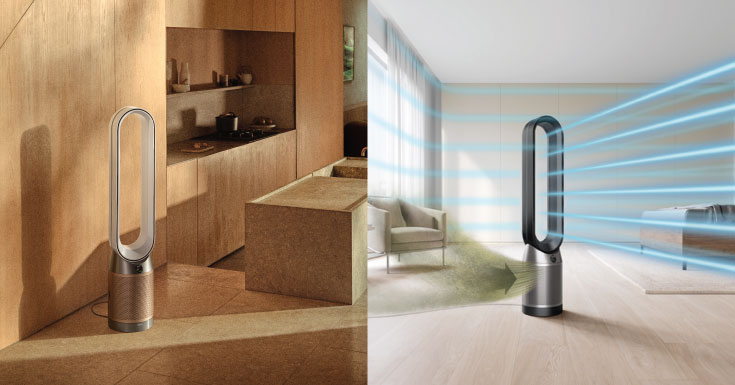
Air projection is therefore an important part of Dyson’s approach to purification. For example, the Dyson Purifier Cool PC2 De-NOx (TP12) uses Air Multiplier™ technology to project purified air throughout the room, helping distribute cleaner air beyond the immediate area around the machine.
5. Choose a purifier that fits your space and lifestyle
The size of the space, where the purifier will be positioned and how it will be used within the home are also important considerations.
Larger machines may be suited to bigger living spaces, while compact purifiers can offer greater flexibility for bedrooms, home offices or smaller rooms. Practical features such as noise levels, portability, filter life, automatic purification and app connectivity can also affect how easily a purifier fits into everyday routines.
Ultimately, choosing an air purifier should go beyond any single specification. Understanding what is in your air, how pollutants are captured and how purified air moves throughout the room can help you select a machine that is better suited to your home and needs.
Choosing the right Dyson purifier for your space
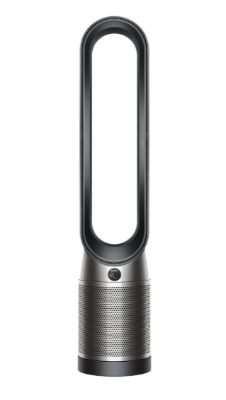
Dyson Purifier Cool PC1 — RM1,999
Compact purification for smaller rooms, capturing viruses, allergens and odours, with cooling and app connectivity.
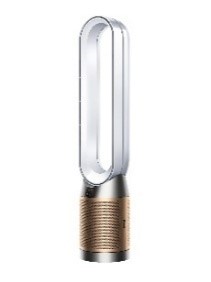
Dyson Purifier Cool PC2 De-NOx — RM2,699
Advanced urban-air purification that targets NO₂, viruses, allergens and formaldehyde, with a K-carbon filter, cooling and app connectivity.
[1] IQAir, World Air Quality
[2] Unit Komunikasi Awam Sarawak (UKAS), 2026
[3] Indonesia’s wildfires may last until early November, minister says (Reuters, 2026)
